Crescent Hill High
I'm the Werewolf in my ClassCrescent Hill High is the central institutional setting of Sebastian Wolfe’s early transformation and the place where his two identities collide most visibly. At school, birthday conversations, classes, lockers, costumes, and alarms preserve the appearance of ordinary teenage life; beneath that routine, Sebastian’s heightened senses, physical changes, secret loyalties, and connection to the artifact draw danger directly into the human world. The school therefore becomes more than a backdrop: it is the threshold at which private bodily change becomes a social and supernatural crisis.
Setting and Everyday Routine
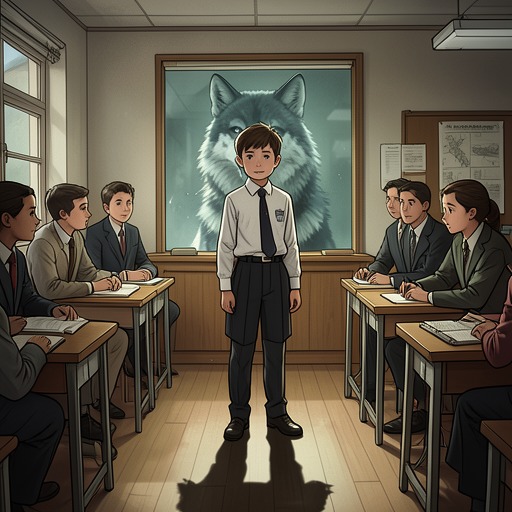
Crescent Hill High initially represents the normal life Sebastian is trying to protect. On the morning of his sixteenth birthday, he walks there through the cool October air after leaving his parents before they can explain their family history. Alex joins him on the way, and later Sebastian and Mia discuss classes and weekend plans as they approach the school. Their conversation belongs to the familiar rhythm of student life, but Sebastian cannot fully participate in it because every sound and smell has become unnaturally intense. By the time they reach the school, his head is pounding, and Mia notices that he looks pale.
The contrast between the building’s routine and Sebastian’s private emergency gives the school its distinctive dramatic pressure. He insists that he is fine even as nausea overtakes him, then abandons the corridor and stumbles toward the woods behind the school. The school remains visible as the source of the distant first bell while Sebastian’s body begins to cross a boundary he does not understand. Its ordinary schedule continues at the exact moment his human certainty collapses.
The First Transformation Near the School
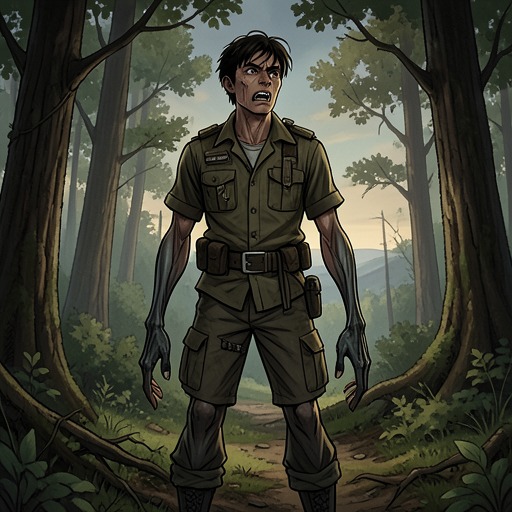
Crescent Hill High is the immediate setting for the first unmistakable public crisis of Sebastian’s werewolf condition, even though the transformation occurs at the edge of the woods behind the building. He barely reaches the trees before doubling over in pain. His bones seem to shift, his skin crawls, and coarse dark hair begins sprouting from his hands. The school bell sounds in the distance as the full moon appears behind a cloud, joining institutional time and lunar compulsion in one decisive moment.
Sebastian’s howl confirms that the event is not an illness or an adolescent embarrassment but a supernatural transformation. The school’s proximity intensifies the danger: classmates and friends are close enough to notice his disappearance and call after him, while the woods offer only a temporary margin of concealment. Later, he struggles to explain his symptoms to Alex and Mia, using excuses such as low blood sugar, a stomach ache, or birthday jitters. These evasions show how Crescent Hill High becomes a testing ground for managing a hidden stigma. The school demands visible normality, while Sebastian’s changing body repeatedly threatens to expose what he cannot yet explain.
Concealment, Friendship, and Identity
Sebastian’s relationships at Crescent Hill High make concealment both necessary and increasingly difficult. Mia worries when he appears pale and later when he behaves strangely; Alex recognizes that he has been acting oddly and presses him to explain what is really happening. Sebastian wants to preserve his friendships, but he also fears sharing a secret that he does not understand himself. The school’s corridors and classrooms thus become spaces of impression management, where a normal expression or a plausible excuse can temporarily postpone discovery.
The Halloween celebration gives that concealment an ironic visual form. The halls are filled with superheroes, monsters, and ghosts, allowing supernatural imagery to circulate openly as entertainment. Sebastian arrives without a costume and tries to blend into the crowd, but Alex immediately calls attention to his absence of disguise. Ethan and Lily then provide him with an exaggerated werewolf costume and send him to the bathroom to change. The outfit is deliberately cheesy rather than realistic, unlike the sleek costumes worn by Ethan and the others, and Alex and Mia laugh when Sebastian emerges.
The costume creates a form of hiding in plain sight. A werewolf identity can be displayed at Crescent Hill High precisely because the school interprets it as a joke or seasonal performance. The scene also contrasts social acceptance with Sebastian’s private fear: the others can laugh at a costume because they know the truth behind the image, while Sebastian is still trying to determine whether the monster represented by the costume is part of him. The school’s festive culture briefly makes his secret less visible, but it cannot remove the danger attached to it.
The Rogue Incursion
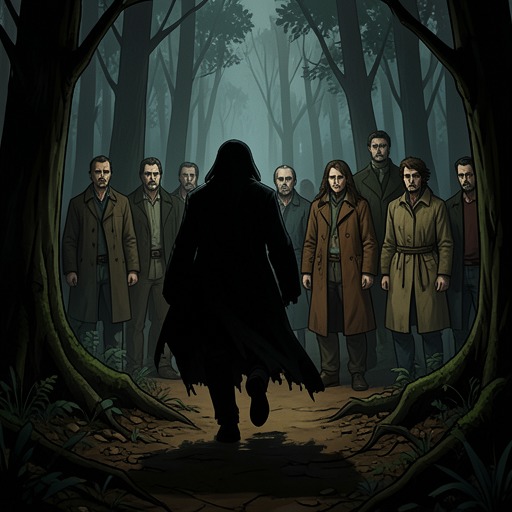
Crescent Hill High changes from a site of adolescent routine into a contested and dangerous space when the rogues enter the school. During lunch in the cafeteria, a sudden fire alarm sends students filing out. As Sebastian prepares to follow them, Lily grips his arm and urgently pulls him toward a side exit. She warns him that the rogues are at the school and believes they have discovered his connection to the artifact.
The warning transforms the meaning of the alarm. What appears to be an ordinary school emergency becomes the signal of a supernatural breach. The cafeteria, normally a communal student space, becomes the point from which Sebastian must be extracted. Lily’s response also reveals that the wolf pack’s priority is not merely to confront the intruders but to remove Sebastian from the human population before the conflict escalates. Crescent Hill High is treated as territory requiring protection, yet it is also a vulnerable institution whose students are largely unaware of the forces moving through it.
The incursion exposes the limits of secrecy. Sebastian’s werewolf identity has been managed through excuses, hurried escapes, and a comic costume, but the rogues’ knowledge of his artifact connection brings the hidden conflict into the school itself. The building can no longer separate ordinary education from the supernatural struggle surrounding Sebastian. Its alarm, exits, and crowded student spaces become part of the pack’s emergency response.
Narrative Significance
Crescent Hill High represents the threshold between belonging to ordinary human society and entering the werewolf pack. Sebastian repeatedly leaves its regulated spaces when his body becomes uncontrollable, then returns carrying knowledge that makes the old routine impossible to recover. The school is where friends first observe his symptoms, where secrecy demands repeated performance, and where the external threat finally arrives without disguise.
Its significance is also shaped by contrast. The birthday morning begins with pancakes and parental concern, continues through classes and conversations, and ends in a bodily crisis under the full moon. Later, colorful Halloween costumes turn monsters into harmless decoration until the real supernatural danger penetrates the same halls. Crescent Hill High therefore stages the instability of appearances: a school can look safe while danger gathers inside it, and a werewolf can look like an ordinary student—or, during Halloween, like someone merely pretending to be one.
By the end of the surrounding events, Sebastian’s relationship to the school is inseparable from his larger movement toward acceptance. His first transformation begins near its grounds, his friends’ concern gathers around its corridors, and the rogue threat forces the pack to act within it. The school marks the world he has been trying to remain part of, while the acceptance he eventually feels with his new companions points beyond that solitary performance. The final sense that he is coming home gains force because Crescent Hill High has shown what it means to live between a familiar human institution and a newly recognized supernatural community.